
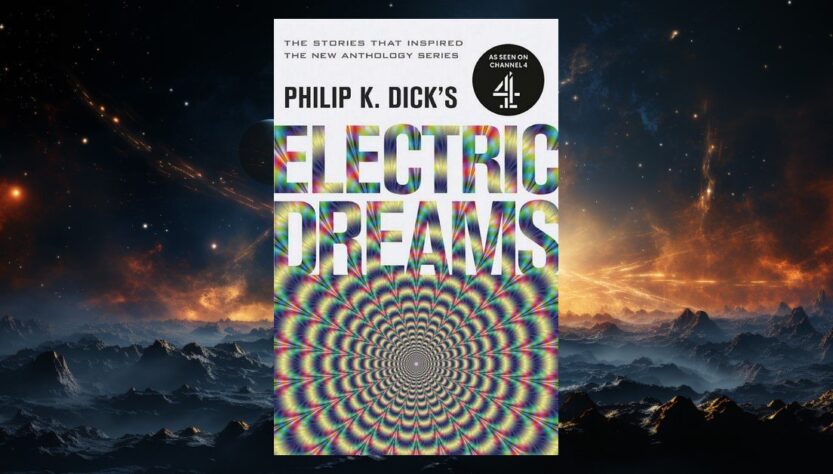
Philip K. Dick was writing The Twilight Zone before The Twilight Zone existed. That’s not hyperbole. The ten stories collected in Electric Dreams were published between 1953 and 1955, years before Rod Serling’s iconic show first aired in 1959. And yet reading them, you get that same delicious unease, that same feeling of the ground shifting beneath your feet. The difference is that Dick’s stories are messier, angrier, and more paranoid than anything Serling ever put on screen. They’re also, frankly, more fun.
This 2017 collection was put together as a tie-in for the Channel 4/Amazon anthology series, and each story comes with a brief introduction from the TV writer or producer who adapted it. These intros are a genuinely nice touch. Some of the adaptations diverged wildly from their source material, and hearing the showrunners explain why they made the choices they did adds an extra layer of interest. It’s like getting the director’s commentary before you’ve even watched the film.
But the real draw here is Dick himself, and the sheer density of ideas he packs into these short stories. Reading all ten in sequence is like going on a pub crawl through the brain of a paranoid genius. Each stop is different, each one hits you slightly harder than the last, and by the end you’re reeling but absolutely glad you came along.
Sales Pitch is a standout, and possibly the most savage piece of satire in the collection. A man is relentlessly pursued by a robot salesman that simply will not take no for an answer. It’s consumerism as horror, advertising as psychological warfare, and it reads like it was written yesterday rather than seventy years ago. Anyone who has ever been followed around the internet by a targeted ad will feel a chill of recognition.
Foster, You’re Dead takes a different angle on the same anxieties. Set in a world where nuclear shelters are consumer products, constantly upgraded and marketed like the latest smartphone, it explores how governments and corporations weaponise fear to sell things. The story follows a boy whose family can’t afford the newest model, and the social shame that comes with it. Dick wrote this in the shadow of McCarthyism and duck-and-cover drills, but swap “bomb shelter” for “home security system” or “cyber insurance” and the story barely needs updating.
Then there’s Human Is, which is quietly devastating. A woman’s cold, neglectful husband goes on a space mission and comes back completely transformed. Kinder, warmer, more present. The question of what actually happened to him becomes secondary to a much more unsettling question about what it really means to be human. Dick doesn’t hammer the point. He doesn’t need to. The ending sits with you for days.
The Hanging Stranger operates in completely different territory. It has genuine horror energy, the kind that makes you glance over your shoulder. A man notices a body hanging from a lamppost in the town square and is disturbed to find that nobody else seems bothered by it. What follows is a queasy blend of body horror and mob conformity that feels like it could have been written by someone who’d read Invasion of the Body Snatchers and thought, “I can make that worse.” He could, and he did.
The Hood Maker wrestles with privacy, surveillance, and how society treats those who are different. In a world where telepaths exist, the non-telepathic majority starts wearing hoods to block their thoughts from being read. The parallels to modern debates about data privacy, profiling, and the treatment of minority groups are hard to miss, and Dick handles them with more nuance than you might expect from a pulp SF story written in 1955.
Not every story in the collection is a masterpiece. Exhibit Piece and Impossible Planet are solid but feel slighter alongside the heavyweights. The Commuter has a wonderful central conceit about a town that may or may not exist, but it doesn’t quite stick the landing. The Father-Thing goes full body-horror invasion, which is entertaining enough, though it’s the least thematically interesting of the ten. Autofac rounds things out with a post-apocalyptic fable about automated factories that have outlasted the civilisation that built them; the ideas are sharp, and it feels pointed in an age of AI, even if the execution is a little clunky.
For context: I’ve also read Ubik, one of Dick’s later novels, and gave it three stars. It’s ambitious but collapses under its own weirdness by the end. These short stories are, counterintuitively, where Dick is at his most controlled. The short form suits him. He gets in, delivers a gut-punch, and gets out before the seams start to show.
If you’ve never read Philip K. Dick and want to know what all the fuss is about, this collection is a genuinely brilliant entry point. If you already love his work, having these ten stories together in one place, with the bonus context of the TV adaptations layered in, makes it something special. The anxieties he was writing about in the early 1950s, conformity, surveillance, consumerism, what it means to be truly human, haven’t gone anywhere. If anything, they’ve got louder.
Rating: 5/5
Discover more from Unfolded Universe: Sci-Fi Book Reviews
Subscribe to get the latest posts sent to your email.