
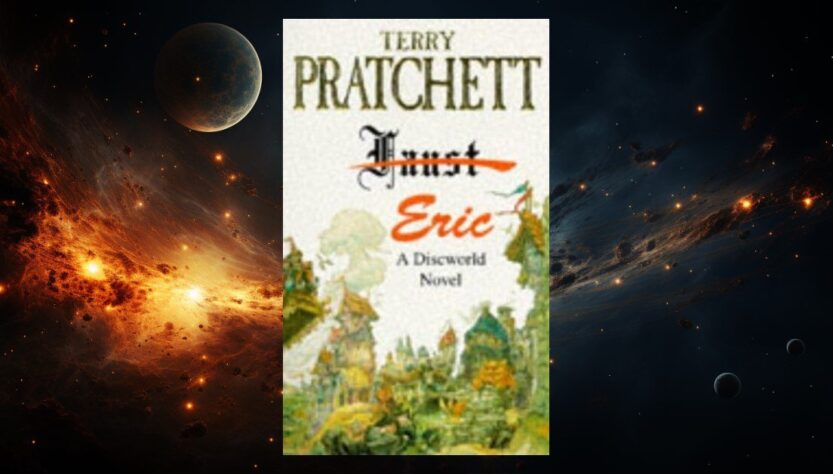
Eric is Pratchett in compact mode, meaner, punchier, and very aware of its own absurdity. It riffs on Faust, but in Discworld that means a teenage would-be demonologist, a wizard who is definitely not in control, and a tour through places that get darker and weirder the longer you look at them.
What works
Rincewind is used really well here. He is still the same panic-powered anti-hero from the early books, but the setup in Eric gives him a great straight-man role against a kid who thinks magic works like a bargain basement wish machine. The running joke around the three wishes stays funny because Pratchett keeps twisting the logic instead of repeating the gag.
The Hell material is also excellent, especially the petty management culture and bureaucratic misery. It feels like fantasy satire wired into an office comedy, which is a very Pratchett thing to do when he is on form. The Tezuman sequence is another standout, funny on the surface, grim if you think about it for a second, then funny again.
What did not quite land
It is slight. Even by early Discworld standards, it is more of a savage novella than a full novel. If you come in wanting the deeper character work of books like Mort or the social bite of later Watch books, this one feels lighter and more throwaway. A couple of stretches read more like extended sketches than a fully built arc.
Why it still earns a 4
Having read far beyond this point in Discworld, Eric still holds up because it knows exactly what it is. It is quick, sharp, and packed with Pratchett’s nastier little observations about power, vanity, and people asking for exactly the wrong things. Not top-tier Discworld, but very easy to recommend, especially if you like your fantasy with Monty Python energy and a slightly demonic grin.
Rating: 4/5
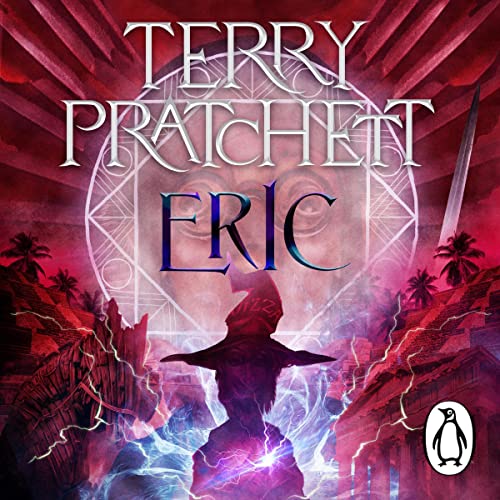
The Audible UK edition is narrated by Colin Morgan, Peter Serafinowicz, and Bill Nighy, and runs to 4 hrs and 2 mins.
Discover more from Unfolded Universe: Sci-Fi Book Reviews
Subscribe to get the latest posts sent to your email.