

Review
Having now read the whole City Watch run, Feet of Clay feels like one of the key books in it. Men at Arms is where Terry Pratchett works out the shape of the Watch; this is where he starts showing just how much range that setup gives him. It is still funny, still packed with throwaway lines and glorious bits of civic absurdity, but it is also more confident as a mystery and much more pointed in what it has to say about class, personhood, and the way power protects itself.
The setup is excellent. Lord Vetinari is being slowly poisoned, harmless old men are ending up dead, and all the clues seem to point towards the city’s golems, who are supposed to be the least troublesome beings in Ankh-Morpork. Around that, Pratchett keeps piling on pressure from every angle. Nobby is suddenly being treated as if he might have noble blood; Angua is dealing with what the book wonderfully calls pre-lunar tension; and the Watch has a new forensic brain in Cheery Littlebottom, whose arrival quietly opens up one of the novel’s smartest character threads.
What I like most here is how well Pratchett balances the procedural side with the social satire. This really does work as a whodunnit. Vimes and Carrot spend a lot of the book following clues, interviewing people, and trying to work out not just who is behind everything, but how the crime is even being committed. The business with the poisoned candles is properly nasty, and the investigation has a satisfying mechanical logic to it. Pratchett was often underrated on plot because people fixated on the jokes, but books like this are a reminder that he could build a mystery that actually holds together.
At the same time, Feet of Clay is doing much more than solving murders. The golems are obviously the big thematic engine. Dorfl in particular gives the book a lot of its weight, because the question is not simply whether a golem can kill, it is whether a golem can count as a person at all. Pratchett gets at slavery, labour, religion, and free will without ever turning the novel into a lecture. The famous line about words in the heart lands because he has earned it, not because he is reaching for easy profundity.
Vimes is superb in this one. By this point he has become one of Pratchett’s great weapons, a man permanently annoyed that the world insists on being run by polished idiots, but also a copper with a very clear moral line once ordinary people start getting crushed. Feet of Clay knows exactly how to use that. The case matters because the victims matter, and because once Vimes realises what the powerful are prepared to sacrifice to preserve their idea of order, the whole thing develops a real, controlled fury underneath the comedy.
It also helps that the supporting cast is so strong. Carrot remains funny precisely because Pratchett refuses to make him simple. He is decent, yes, but also shrewd enough to make that decency slightly unnerving. Cheery’s introduction is one of the best things in the book, not because Pratchett makes a big speech out of it, but because he lets identity, presentation, and dwarf social norms become part of the everyday fabric of the Watch. Even Nobby’s brush with aristocracy works, partly because any story that involves the possibility of Nobby Nobbs becoming socially acceptable is funny on sight.
If I have a reservation, it is that this is a four-star Discworld rather than a five-star one because I admire it slightly more than I love it. The ideas are first-rate, the mystery is clever, and the satire bites, but it does not hit me with quite the same force as Guards! Guards!, Small Gods, or later Watch high points like Night Watch. A few sections feel more interested in the machinery of the plot than in letting the emotional side breathe. That is a minor complaint, though, especially given how much the book is juggling.
What stands out most, looking back from the later Watch books, is how much of their future strength is already here. The mix of grubby police work, institutional satire, and genuine moral seriousness feels properly locked in. If Men at Arms built the team, Feet of Clay proves what that team can do once Pratchett starts pushing beyond parody into something richer and more unsettling.
If you like fantasy that uses trolls, dwarfs, werewolves, and animate clay to talk about real social questions, this is prime Terry Pratchett territory. If you like crime fiction with actual clue-tracking rather than vague atmosphere, it delivers there too. Most of all, if you like Discworld when it remembers that the city is ridiculous and unfair at exactly the same time, Feet of Clay is a very easy recommendation.
Rating: 4/5
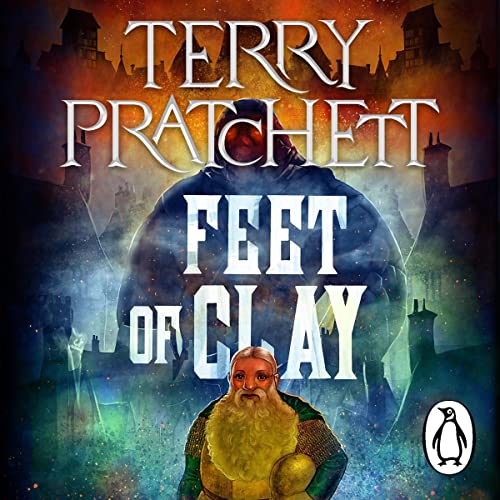
The Audible UK edition is narrated by Jon Culshaw, Peter Serafinowicz, and Bill Nighy and runs to 12 hours and 20 minutes.
Discover more from Unfolded Universe: Sci-Fi Book Reviews
Subscribe to get the latest posts sent to your email.