
Review
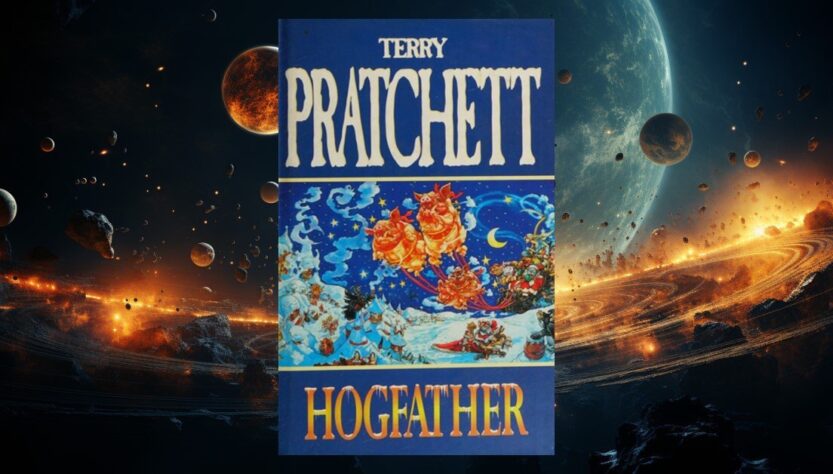
Coming after Soul Music by Terry Pratchett, Hogfather is one of those Discworld books where the premise sounds like a seasonal joke, then Pratchett quietly turns it into something much sharper. The Discworld’s version of Father Christmas has gone missing, Death has stepped into the red suit, and Susan Sto Helit is dragged back into the family business despite doing her best to live a normal life as a governess. That is already a strong comic setup, but the book is really about belief, childhood, stories, and the strange mental machinery humans use to make the world survivable.
This is the fourth Death book, and it absolutely benefits from everything Pratchett has already built in Mort, Reaper Man, and Soul Music. Death is not a novelty here. He is not just the funny skeleton who talks in capitals. By this point, he is one of the richest characters in the series, and Hogfather understands exactly how to use him. Watching him try to perform festive cheer is very funny, especially because he takes the job so literally, but the joke lands because Death is also genuinely trying to understand why the Hogfather matters.
Susan is the other big reason the book works. She has that classic Pratchett competence, impatient, practical, allergic to nonsense, but also just strange enough to belong in this story. Her scenes with the children are brilliant because she can see the monsters, knows the rules, and still has the air of someone annoyed that reality is being so unprofessional. She is a great counterweight to Death, and her no nonsense approach keeps the book from floating away into pure whimsy.
The villains and supporting threads are a little more uneven for me. Mr Teatime is memorable in an unsettling, glassy-eyed sort of way, and the Auditors are a perfect Discworld idea, beings who hate mess, individuality, and life itself because it refuses to behave like proper mathematics. The wizards at Unseen University are also very funny, especially once stray beliefs start taking shape in increasingly ridiculous forms. But the book sometimes feels like it is juggling one or two more comic mechanisms than it strictly needs. Compared with Soul Music, which I think has a cleaner emotional through-line, Hogfather is a touch more scattershot.
That said, when it hits, it really hits. The tooth fairy material is wonderfully creepy, the holiday imagery is just familiar enough to feel cosy before Pratchett twists it, and the philosophical core is much stronger than a comic fantasy Christmas book has any right to be. It has the feel of a festive fairy tale filtered through satire, folklore, and a pub conversation that somehow ends up debating anthropology at closing time.
It also sits interestingly in the wider Death strand. Mort has the punch of discovery, Reaper Man has the big existential sweep, Soul Music has the energy and emotional snap, and Thief of Time later refines this side of Discworld into something astonishingly elegant. Hogfather is not my absolute favourite of that run, but it is still a very good one, and probably one of the most distinct. It is Pratchett in full festive mode, but with sharp instruments hidden under the wrapping paper.
If you already like Discworld, this is an easy recommendation. If you like Christmas stories that are secretly about why humans need myths, rituals, and comforting lies in order to become decent people, it is even easier. Funny, strange, clever, and just a little bit grim in the best possible way.
Rating: 4/5
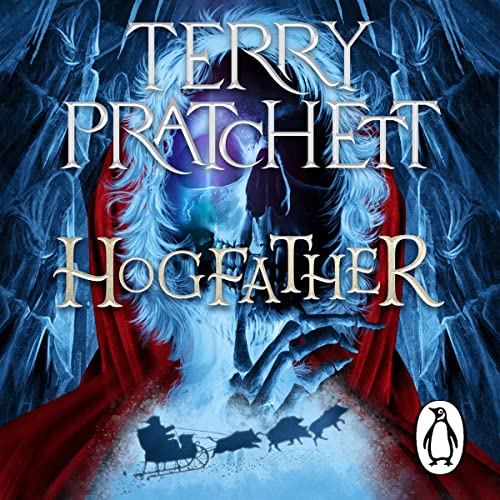
The Audible UK edition is narrated by Sian Clifford, Bill Nighy, and Peter Serafinowicz and runs to 10 hours and 18 minutes.
Discover more from Unfolded Universe: Sci-Fi Book Reviews
Subscribe to get the latest posts sent to your email.