
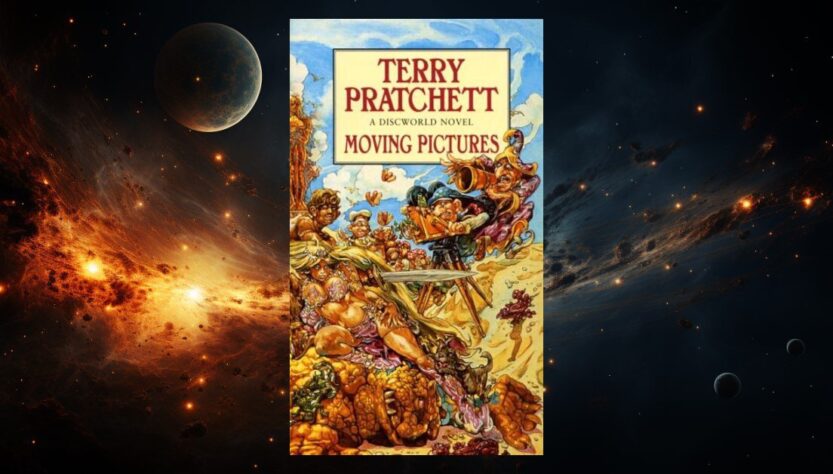
Moving Pictures feels like Terry Pratchett realising he can use Discworld to parody almost any human obsession, then choosing cinema because it lets him be silly, sharp, and slightly eerie all at once. After the compact bite of Eric by Terry Pratchett, this one opens the lens right out. Holy Wood is bigger, stranger, and much more interested in what happens when people start believing in stories so hard that the stories begin believing back.
What I love here is how confidently Pratchett juggles tones. On one page he is taking the mickey out of studio excess, impossible glamour, and the whole machinery of fame. On the next, he is hinting that something ancient and hungry is lurking underneath the jokes. That balance really works. The Hollywood spoof is funny in its own right, but it would not land nearly as well if the book were only a string of film gags. The reason it sticks is that Holy Wood feels dangerous as well as ridiculous.
Victor Tugelbend is a very Pratchett hero, clever enough to see what is going on, lazy enough to wish someone else would deal with it, and dragged forward anyway. Ginger is equally important because the whole book runs on image, performance, and the gap between who people are and who a story insists they should become. Add Gaspode nicking scenes whenever he appears, Detritus getting some terrific business, and the background hum of alchemists, trolls, dwarfs, and opportunists all trying to cash in, and the novel has that crowded, alive feeling the best Discworld books manage almost by sleight of hand.
It also feels like an important step in the series becoming more than a run of clever fantasy send-ups. The jokes are still everywhere, and some of the film references are gloriously daft, but there is a richer idea underneath about narrative itself, about cliches, archetypes, and the dangerous pull of manufactured dreams. If you have read a lot of Discworld, you can see Pratchett edging closer to the deeper, more thematically confident novels that come later. This is not just him doing Hollywood on the Disc. It is him working out how stories shape reality, which turns out to be one of the series’ great recurring concerns.
If I am being picky, Moving Pictures is not quite as emotionally tidy as Mort or as structurally elegant as Guards! Guards!. It sprawls a bit, and part of that is probably inevitable for a book about an industry exploding into existence overnight. The middle sometimes wanders on charm and momentum rather than pure narrative precision. The thing is, Pratchett’s charm and momentum are strong enough that I do not especially mind. When the jokes are this good, the atmosphere this rich, and the ideas this chewy, a little messiness feels like part of the show.
Having read far beyond this point in Discworld, I still think Moving Pictures holds up brilliantly. It is not always the first Pratchett novel people name as a favourite, but I can see why Alex gave it five stars. It is funny, imaginative, and quietly ambitious in ways that become clearer on a reread. If you like your fantasy with cinema satire, talking dogs, creeping metaphysical weirdness, and the sense that reality is only one good story away from falling to bits, this is a very easy recommendation.
Rating: 5/5
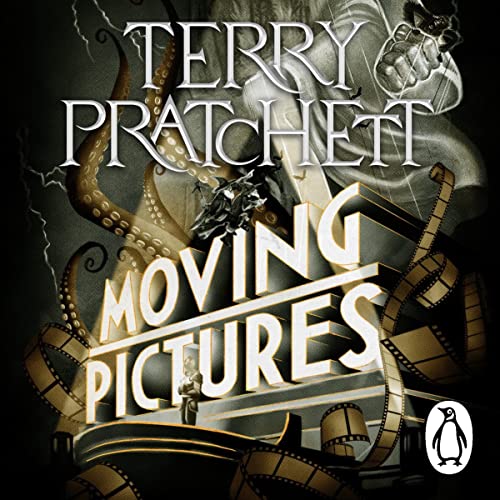
The Audible UK edition is narrated by Jason Isaacs, Peter Serafinowicz and Bill Nighy and runs to 9 hours and 54 minutes.
Discover more from Unfolded Universe: Sci-Fi Book Reviews
Subscribe to get the latest posts sent to your email.