
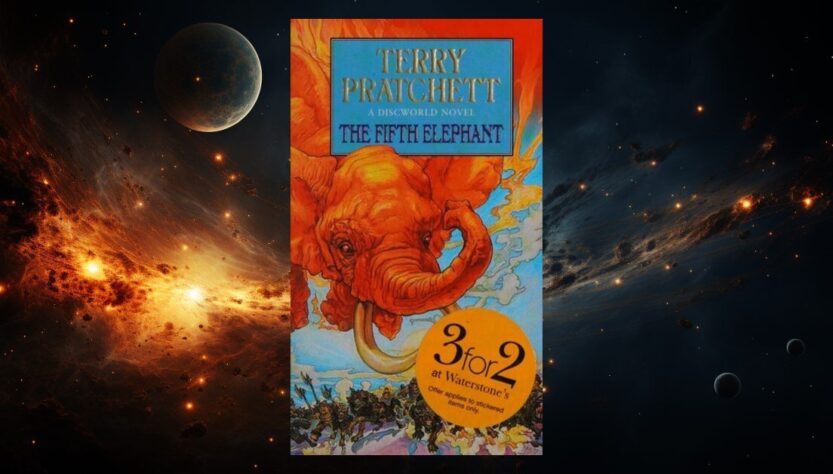
Review
Coming after Jingo by Terry Pratchett, The Fifth Elephant feels like the City Watch books stretching their legs and realising they can do far more than police procedural with jokes. It is still unmistakably a Sam Vimes novel, all suspicion, irritation, moral stubbornness, and deep dislike of aristocratic nonsense, but it drops him into Uberwald, throws dwarfs, vampires, werewolves, fat politics, and diplomatic theatre at him, then watches him respond like a man who has been told to attend a state banquet in a badly fitting suit while already halfway through a murder investigation.
That is a large part of why this works so well. Vimes is a superb fantasy protagonist precisely because he is not grand about any of this. He is a copper. He distrusts titles, ceremony, inherited power, and anyone who seems too pleased with themselves, which makes sending him abroad as an ambassador a very Pratchett sort of joke. The tension between what the job officially is, and what Vimes inevitably turns it into, gives the novel a lot of its bite. He keeps trying to do the decent, practical thing in a landscape built out of old grudges, clan loyalties, and ancient theatre, and the friction from that carries the book beautifully.
Uberwald itself is one of the strongest settings in the whole Watch run. Pratchett leans hard into folklore here, but never in a generic fantasy way. The dwarfs, the werewolves, the vampires, the deep forests, the snow, the sense of old power sitting under every conversation, it all feels like Discworld doing central and eastern European gothic through the lens of a satirist who also loves monster stories. There is a lot of fun to be had in how seriously the local power structures take themselves, and how little that impresses Vimes once bodies start dropping and the political posturing turns into actual danger.
It also helps that this is one of the books where the wider Watch cast feels fully matured. Carrot’s impossible sincerity, Angua’s divided loyalties, Colon and Nobby being Colon and Nobby, they are all used with the confidence of a writer who knows exactly how much page time each note needs. The book never loses sight of Vimes, but it understands that the Watch has become a proper ensemble by this point. Having read the later City Watch books as well, this is one of the clearest moments where that machine is visibly humming. You can feel Pratchett discovering just how much mileage he can get from putting these personalities under pressure in different combinations.
What stops it short of the absolute top tier for me is mostly shape rather than substance. Night Watch digs deeper emotionally, Feet of Clay feels tighter as a mystery, and Guards! Guards! still has the joy of first contact with this corner of Discworld. The Fifth Elephant is a little more sprawling than the sharpest Watch entries, and some of its political threads are more enjoyable as texture than as engines for the plot. That is hardly a disaster when the texture is this good, but it does mean the book occasionally feels more like a rich plateful than a perfectly balanced meal.
Still, rich is the word. This is Pratchett in full command of his world, able to move from slapstick to tension to pointed satire without sounding as if he is showing off. The jokes are strong, the folklore angle gives the book real atmosphere, and Vimes remains one of fantasy’s great anti-romantic heroes, a man whose main superpower is refusing to let bullies, blue bloods, or supernatural predators get away with it just because the room says they should. If you like your fantasy with mystery, political friction, and a protagonist who treats destiny as something to be arrested for loitering with intent, this is a very easy recommendation.
Rating: 4/5
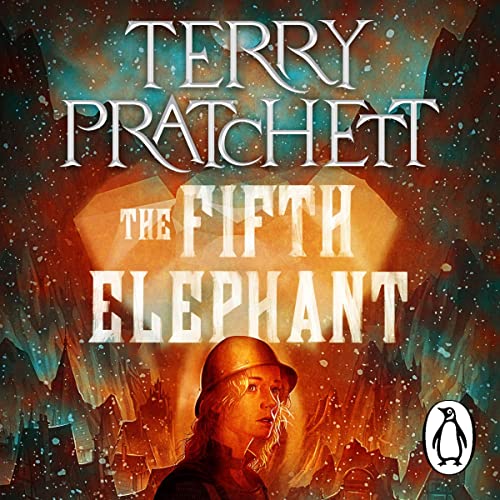
The Audible UK edition is narrated by Jon Culshaw, Peter Serafinowicz, and Bill Nighy and runs to 13 hours and 51 minutes.
Discover more from Unfolded Universe: Sci-Fi Book Reviews
Subscribe to get the latest posts sent to your email.